How Water Damage Cleanup Works in Cheyenne, Wyoming
When water penetrates living spaces, rapid action is essential. Indoor moisture migrates across drywall, baseboards, and subflooring. The U.S. EPA emphasizes drying materials within 24 to 48 hours to inhibit microbial growth.
Cheyenne Water Damage operates strictly as a referral service. We connect property owners directly with independent restoration contractors equipped with industrial extractors, air movers, and dehumidification systems.
Four Primary Water Restoration Service Categories
Restoration contractors handle water damage cleanup through specialized, phased disciplines depending on the source and volume of moisture:
Water Removal & Extraction
The physical evacuation of bulk standing water using truck-mounted vacuum extractors and submersible pumps. Removing liquid water rapidly prevents deep saturation of subfloors and crawl spaces.
Learn about water extraction →Applied Structural Drying
Scientific evaporation and humidity control. Specialists deploy penetrating moisture meters, thermal cameras, centrifugal air movers, and commercial dehumidifiers to dry wall cavities and studs.
Explore structural mitigation →Storm & Flood Cleanup
Clearing exterior silt, mud, and stormwater that breaches window wells or entryways following convective cloudbursts or regional drainageway overflows.
Read about flood cleanup help →Basement Water Removal
Targeted remediation for below-grade water intrusion caused by hydrostatic ground pressure, sump pump failure during power disruptions, or sewer backups.
Basement flood remediation →Cheyenne Climate & Seasonal Water Risks
According to 1991–2020 normals from the National Weather Service Cheyenne Office, the area averages 170.4 days per year with minimum temperatures at or below 32°F and 62.9 inches of annual snowfall.
Sub-zero winter freezes put unheated plumbing lines in crawl spaces and exterior walls at high risk. When frozen pipes rupture upon thawing, hundreds of gallons can escape. You will need a licensed plumber to fix the line and a restoration contractor to dry framing studs.
During summer, convective storms drop heavy rainfall. The City of Cheyenne Floodplain Services documents urban runoff hazards including yard ponding and overbank flooding along Dry Creek and Crow Creek. Frequent severe hail also damages exterior cladding, creating direct stormwater entry paths.
Need Rapid Water Extraction or Structural Drying in Cheyenne?
Speak with a telephone representative right now. Tell them what happened and where your property is located.
Referral service. We do not perform restoration work. Availability and job scope vary.
Cheyenne & Regional Laramie County Referral Coverage
According to U.S. Census estimates, Cheyenne has approximately 65,704 residents, while Laramie County encompasses roughly 101,783. Our network covers confirmed regional ZIP codes:
Confirmed Service ZIPs: 82001, 82002, 82003, 82005, 82006, 82007, 82008, 82009, 82010 (Cheyenne area), 82053 (Burns), 82054 (Carpenter), 82060 (Hillsdale), 82061 (Horse Creek), 82081 (Meriden), and 82082 (Pine Bluffs).
Please note: Listing ZIP 82005 does not claim service to F.E. Warren AFB itself (no base access claims). Contractor availability varies by property location and job scope. See our Coverage Directory for full regional details.
Frequently Asked Questions: Cheyenne Water Damage
Are you a licensed restoration contractor?
No. Cheyenne Water Damage is an independent referral website. We connect callers with independent restoration professionals. We do not inspect buildings, perform restoration work, or bill for mitigation services.
How quickly can a restoration contractor arrive at my property?
Arrival times cannot be guaranteed. Schedules depend on contractor crew availability, storm severity across Laramie County, travel distance, and road conditions.
Will water damage restoration fix my plumbing leak?
No. Restoration contractors extract water, remove damaged drywall, and dry framing studs. If a pipe ruptured, you must engage a licensed plumber to repair the mechanical line.
Will my homeowner's insurance policy cover water mitigation?
Coverage depends on policy terms and the water source. Sudden interior pipe breaks are typically covered under standard homeowner insurance, whereas overland storm flooding usually requires a separate flood policy.
What should I do while waiting for a restoration contractor?
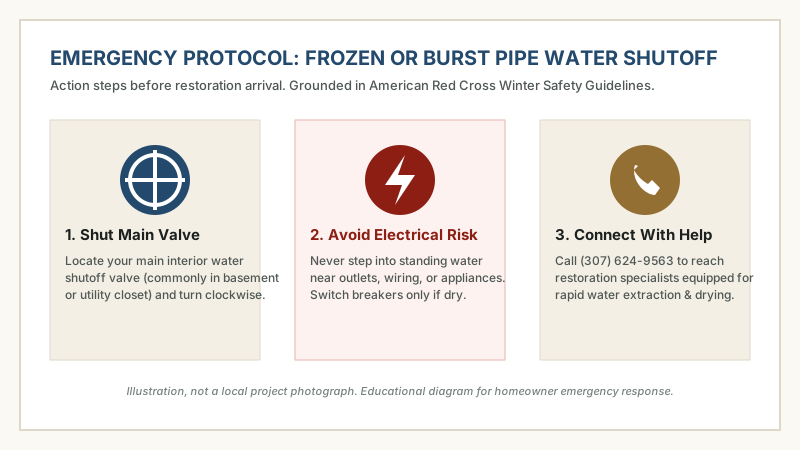
Ensure electrical safety by switching off breakers to damp rooms from a dry panel. Shut off the main water valve if a domestic leak is ongoing, and photograph damage for insurance.
Local Problem Research & Reference Citations
Information regarding Cheyenne weather patterns, municipal flood zones, and indoor moisture control on this page is grounded in the following public agency records:
- [S1]US Census Bureau QuickFacts — Cheyenne City Population: 2024 population estimate: 65,704.
- [S2]US Census Bureau QuickFacts — Laramie County Population: 2024 population estimate: 101,783.
- [S3]City of Cheyenne City Engineer — Floodplain Services: Documentation of late-spring to early-fall thunderstorm flooding, overbank flooding along Dry Creek and Crow Creek, drainage backups, yard ponding, and basement flooding.
- [S5]National Weather Service Cheyenne — Cheyenne Hail Climatology: Climatological record showing an average of over 6 days per year with severe hail reports in the Cheyenne vicinity.
- [S7]National Weather Service Cheyenne — Cheyenne Airport Annual Climate Normals: Cheyenne 1991-2020 climate normals: 170.4 days per year with minimum temperature at or below 32°F, and 62.9 inches normal annual snowfall.
- [S8]American Red Cross — Preventing and Thawing Frozen Pipes: Guidance on risks of freezing in exposed or unheated pipes, safe water shutoff procedures, and avoiding open-flame thawing.
- [S9]CDC Centers for Disease Control and Prevention — Reentering Your Flooded Home Safety: Safety protocols addressing electrical risks, standing water contamination, structural hazards, and portable generator safety.
- [S10]US Environmental Protection Agency (EPA) — Mold Course Chapter 4: Prevention and Control: EPA guidance recommending prompt drying of water-damaged materials, typically within 24 to 48 hours where possible.
Citations are provided for public educational context. Government agencies and nonprofit organizations listed do not endorse this referral website or associated contractors.